Climbing Mont Blanc (4810m): Conquering the Roof of the Alps via the French Normal Route
Standing proudly at 4,810 meters, Mont Blanc — the “White Mountain” — is the highest peak in Western Europe and one of the most iconic summits on Earth. Rising between France and Italy, it dominates the Mont Blanc Massif with its vast glaciers, granite spires, and ridgelines that have shaped the history of alpinism. Climbing Mont Blanc from Chamonix, via the French Normal Route (Voie Normale du Goûter), is a dream and a challenge that combines endurance, skill, and the timeless fascination of the high mountains.
The Classic Route from Chamonix
The Goûter Route is considered the “normal” route to the summit from the French side and remains the most popular way to climb Mont Blanc. Although not technically extreme, it requires excellent physical fitness, good acclimatization, and solid alpine experience due to altitude, exposure, and unstable weather.
The adventure begins in Chamonix, a legendary alpine town and the world capital of mountaineering. From here, climbers reach Les Houches (1,010 m), where the Bellevue cable car and then the Mont Blanc Tramway take you up to the Nid d’Aigle (2372 m) — the true starting point of the ascent.
From the Nid d’Aigle, the climb to the Tête Rousse Hut (3167 m) takes about 2 to 3 hours along rocky trails and glacial terrain. Most climbers spend the first night here to rest and acclimatize. The following day, the route ascends the notorious Grand Couloir, a steep, exposed gully prone to rockfall, requiring utmost caution.
Once across the Couloir, a long rocky ridge leads to the Refuge du Goûter (3835 m), a modern and well-equipped mountain hut offering accommodation and meals. The majority of climbers spend the second night here, allowing their bodies to adapt to the altitude before the summit push.
The Summit Push
Summit day typically begins in the early hours, around 2:00–3:00 AM. From the Goûter Hut, the route climbs steadily up snow ridges to the Dôme du Goûter (4304 m), then traverses the Col du Dôme before reaching the Refuge Vallot (4362 m) — a small emergency shelter marking the start of the most exposed section.
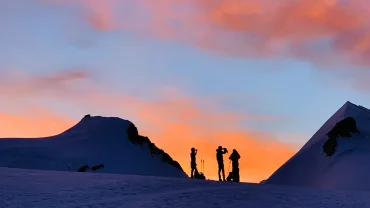
From here, the Bosses Ridge (Arête des Bosses) leads directly to the summit. This airy, knife-edge ridge requires precise footwork and steady nerves, with steep drops on both sides. As dawn breaks and the first light hits the glaciers of the Alps, the panoramic view — stretching from the Matterhorn to the Grand Paradiso and the Jungfrau — is simply unforgettable.
Reaching the summit of Mont Blanc is not only a physical triumph but also an emotional one: standing at the top of Western Europe, surrounded by the silence and immensity of the Alps, is a moment of pure awe.
Duration and Preparation
The ascent of Mont Blanc via the Goûter Route usually takes 3 days:
Day 1: Chamonix → Les Houches → Nid d’Aigle → Tête Rousse Hut (overnight)
Day 2: Tête Rousse → Grand Couloir → Summit (4810 m) → Goûter Hut (overnight)
Day 3: Goûter Hut → Descend to Chamonix
Some climbers opt for a 6-day itinerary to improve acclimatization, including a training climb on a nearby peak such as the Aiguille du Tour (3540 m) or Gran Paradiso (4061 m) before attempting Mont Blanc.
A good level of physical fitness is essential: expect 8–10 hours of continuous effort on summit day, often at sub-zero temperatures and thin air. Endurance, balance, and mental focus are key.
Equipment and Technical Gear
Proper gear is vital for safety and comfort in the high mountains. Each climber should have:
Mountaineering boots compatible with crampons
Crampons and ice axe
Climbing harness and helmet
Rope (usually provided if climbing with a guide)
Warm layered clothing suitable for -10°C to -20°C
Down jacket, gloves, sunglasses, and glacier goggles
Headlamp, thermos, and high-energy snacks
Weather can change rapidly at high altitude, and good-quality gear makes the difference between a safe and successful climb and an uncomfortable, risky one.
Why Climb with a Certified Mountain Guide
While some experienced alpinists may attempt Mont Blanc independently, hiring a certified IFMGA/UIAGM mountain guide is highly recommended. Guides are trained professionals with deep knowledge of the route, weather, and glacier safety. They provide technical equipment if needed, manage rope work, and ensure the climb is conducted safely and efficiently.
A professional guide also helps assess acclimatization, pacing, and conditions, significantly increasing the chance of reaching the summit successfully — and safely descending.
When to Climb Mont Blanc
The best time to climb Mont Blanc via the French Normal Route is from mid-June to mid-September, when huts are open and conditions are most stable. However, even in summer, temperatures at the summit can drop below -15°C, and storms or strong winds are common.
Booking huts (especially the Refuge du Goûter) well in advance is mandatory, as daily quotas and strict environmental regulations limit the number of climbers.
An Unforgettable Alpine Experience
Climbing Mont Blanc from Chamonix is not just a mountaineering ascent — it’s a personal journey of endurance, humility, and discovery. From the picturesque valleys of Haute-Savoie to the high glaciers above 4000 meters, every step brings you closer to the spirit of the Alps.
Whether you’re a seasoned climber or preparing for your first big peak, Mont Blanc offers an experience that unites technical challenge, raw beauty, and the satisfaction of standing atop Europe’s highest mountain.




Comment (0)