Niseko and Rusutsu are two destinations to explore on a freeride trip to Hokkaido, Japan. At Niseko, you can discover four ski areas on the same mountain; at Rusutsu, you can combine groomed runs with designated ungroomed terrain. With touring skins, the trip extends into the surrounding mountains.
The interesting part is understanding how these experiences fit together. A day using the lifts, a descent through the trees and a ski touring outing call for different skills and conditions, even within the same region.
| Experience |
What to expect |
What to consider |
| Niseko United |
Four ski areas, with groomed runs and permitted ungroomed terrain |
Lift operations, accessible terrain and the group’s ability |
| Rusutsu |
Three mountains, with pistes and designated powder and tree skiing areas |
Local rules, visibility and control between the trees |
| Ski touring nearby |
Ascents on skins and descents away from the lifts |
Fitness, snow conditions and route selection |
| Mount Yotei |
A ski touring objective to assess separately |
The group’s preparation, weather and mountain conditions |
For advice on when to travel, budgeting and transport, read our practical guide to a Hokkaido ski trip.
Skiing in Niseko: four ski areas to explore
Niseko United brings together Grand Hirafu, Hanazono, Niseko Village and Annupuri on the slopes of Mount Niseko Annupuri. This gives you scope to vary your days rather than staying in one sector. Connections and access depend on lift operations and conditions, so check the official Niseko United maps and information.
For freeriders, the lifts make it possible to spend much of the day descending. It is still essential to distinguish between groomed pistes, permitted ungroomed areas within the resort and terrain beyond its boundaries.
Fresh snow visible from a chairlift does not, by itself, mean that a slope is open or suitable for the group. Choosing a descent means considering authorised access and the conditions at the time.
Niseko’s gates: what you need to know
At Niseko, access to backcountry terrain beyond the resort boundaries is through designated gates, when they are open. Crossing boundary ropes is prohibited, and closed areas remain off limits even if you can see tracks inside them.
An open gate does not mean a patrolled ski run: the normal resort ski patrol does not operate outside the ski area boundaries. Before heading out, consult the avalanche information, follow ski patrol instructions and make sure you have suitable equipment and preparation. The official Niseko Rules are the reference to check before and during your stay.
Rusutsu: skiing through the trees
Rusutsu adds another dimension to the trip. Its ski area spans West Mountain, East Mountain and Mount Isola, with pistes, ungroomed sections and tree skiing areas shown on the official trail map.
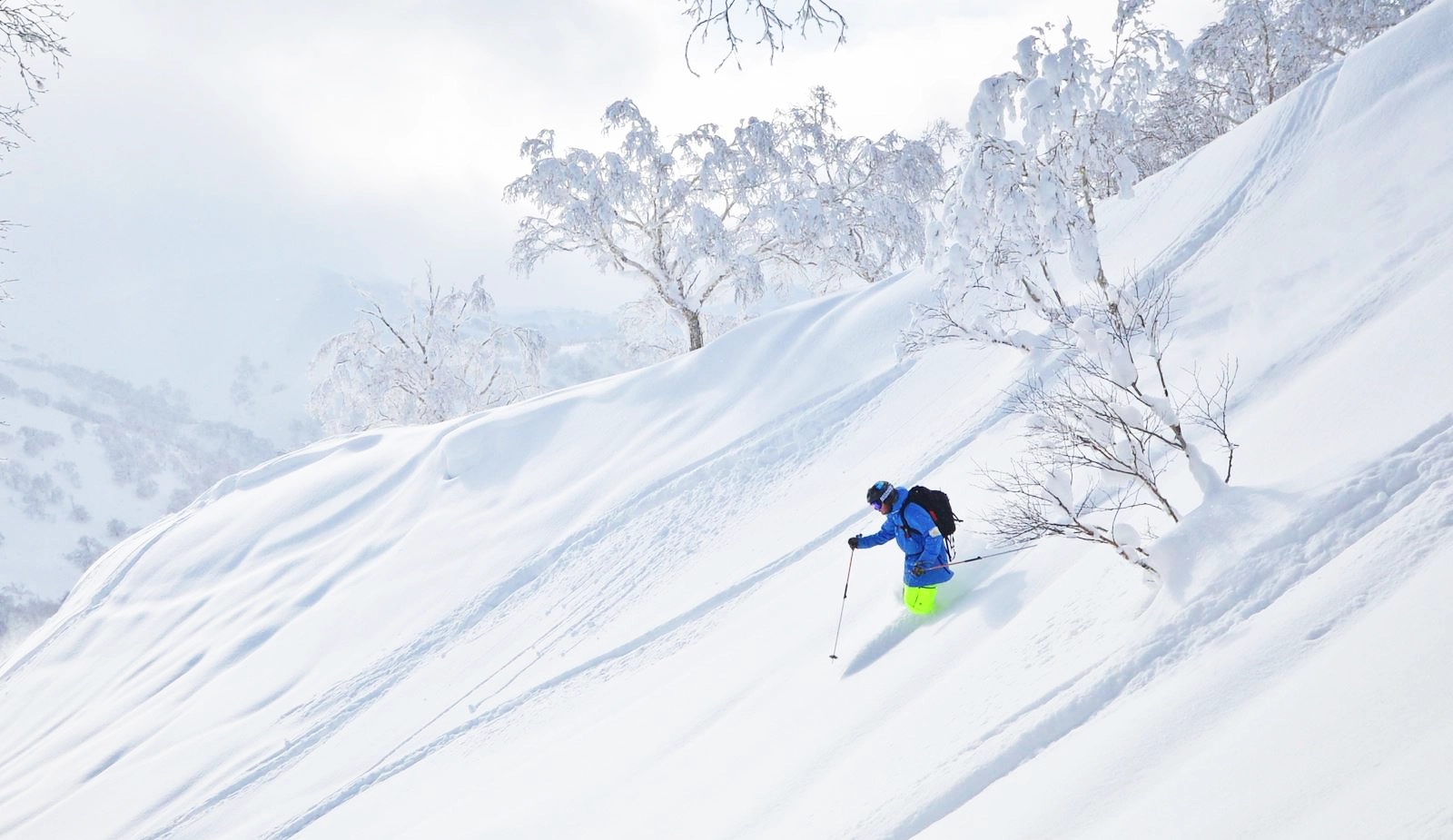
Skiing among trees changes the rhythm of a descent. It requires controlled turns, awareness of the space around you and the ability to adjust your speed. It can become one of the most memorable experiences of the trip, but it calls for familiarity with ungroomed snow.
Trees can provide visual references in flat light; their presence does not automatically make a slope safe. Identify permitted areas using current maps and the resort’s instructions. Rusutsu has its own ski area rules: do not assume that Niseko’s access arrangements apply at other resorts.
Niseko or Rusutsu: choosing where to ski each day
On a freeride trip, Niseko and Rusutsu can complement each other. Niseko offers the variety of its four ski areas; Rusutsu gives you another area to explore, with time to enjoy its descents and permitted wooded terrain.
Daily decisions start with practical questions. Which lifts are open? Where has the snow fallen? How much wind has there been? What is visibility like? How is the group skiing?
Fatigue matters too. After several days on snow, choosing a less demanding programme can help everyone enjoy the rest of the trip. Flexibility allows the itinerary to suit both the mountains and the people, without having to visit a particular resort at any cost.
Ski touring in Hokkaido: what changes when you put on skins
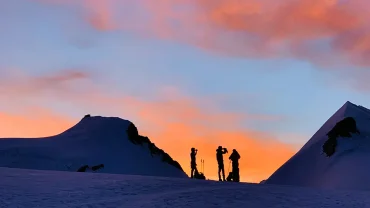
Leaving the lifts behind means spending part of the day climbing. The pace becomes steadier, the group travels together and route selection must account for the descent and return as well as the ascent.
Your preparation needs to match the outing: endurance for the climb, familiarity with your equipment and the ability to ski variable snow. The commitment depends on the route and conditions, so tell your guide about your previous outings and the amount of ascent you are used to.
Our Horizon Hokkaido trip combines lift-accessed freeride days with outings on skins. Destinations are chosen to suit the snow, weather and group.
Mount Yotei: an objective to assess with your guide
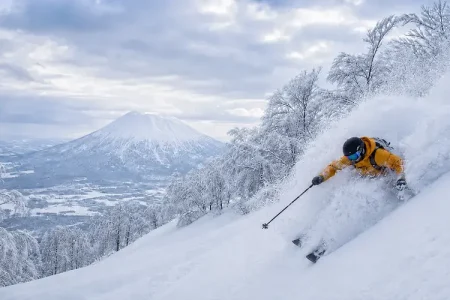
Mount Yotei’s cone dominates the landscape around Niseko. Its shape earned it the name Ezo Fuji, as described by the official Hokkaido tourism website.
It is a possible ski touring objective in the Horizon programme, subject to conditions. It is not a guaranteed stop: the guide assesses whether and how to include it based on the mountain and the participants’ preparation. Come ready to change objectives, with the quality of the overall experience as the priority.
What level do you need for a Hokkaido freeride trip?
The Horizon trip requires previous off-piste experience and good general fitness. Being able to ski a black run is a useful starting point, but it does not fully describe your ability to handle deep or variable snow and skiing between trees.
Before booking, discuss three things with your guide:
- Control on the descent: your ability to manage turns and speed on ungroomed terrain.
- Sustained effort: your experience of skiing full days and several days in succession.
- Experience on skins: previous outings, elevation gains and familiarity with transitions and equipment.
This helps establish whether the trip is suitable and how to prepare. You can find the current requirements on the tour page.
Frequently asked questions
Are Niseko and Rusutsu part of the same ski area?
No. Niseko United comprises Grand Hirafu, Hanazono, Niseko Village and Annupuri. Rusutsu is a separate resort, with its own maps and rules.
Can you ski fresh snow using the lifts?
Yes, there are opportunities within permitted resort areas. Distinguish between terrain inside the ski area and backcountry beyond its boundaries, and check local openings and restrictions.
Do you have to ski tour every day?
The Horizon trip combines lift-accessed freeride with outings on skins. Daily plans adapt to conditions; the preparation required should be discussed before departure.
Is an ascent of Mount Yotei guaranteed?
No. It is an option to assess with the guide, depending on mountain conditions, weather and the group’s ability.
Explore Hokkaido with Horizon Adventures
A trip between Niseko, Rusutsu and the surrounding mountains offers different ways to ski the same region: lift-accessed descents, snowy forests and ascents on skins.
On our Hokkaido trip, you will be accompanied by a UIAGM/IFMGA mountain guide, with a flexible programme combining freeride and ski touring. Explore the programme and contact us to discuss whether the trip suits your experience.





Comment (0)