

Skiing in Japan: The Complete Guide to a Hokkaido Ski Trip
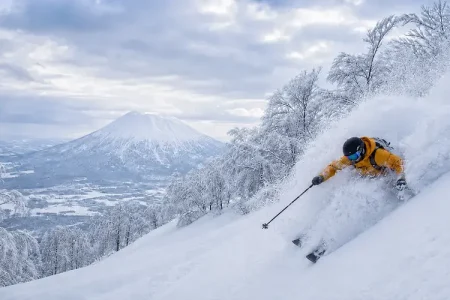
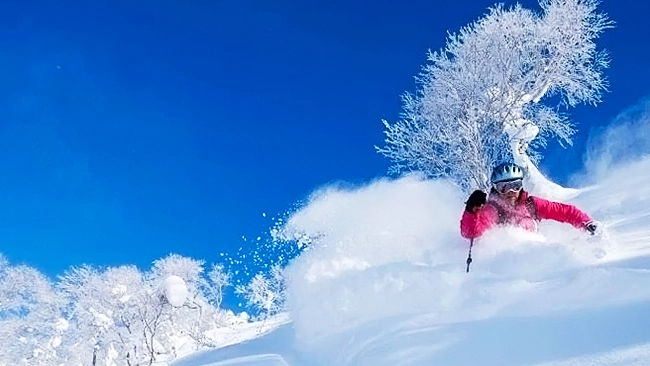
Skiing in Japan is every freerider’s dream, and there is a precise reason for it: Hokkaido, the country’s northernmost island, receives between 13 and 15 metres of snow every winter — an extraordinarily light, dry powder the Japanese call Japow, with no equivalent anywhere in the world. The best window is late December to February, the ideal base is Niseko, and a 10-day guided trip costs €2,550 per person at the early-booking rate (€2,950 after 15 November), flights excluded.
This guide covers everything you need to plan the trip: why Hokkaido’s snow is unique, where to ski, when to go, what it really costs item by item, and how to choose between going independently and travelling with a guide.
The trip at a glance
| Destination | Hokkaido, Japan — Niseko, Rusutsu, Mount Yotei |
| Best season | mid-December to late February (powder peak: January) |
| Recommended length | 8–10 days — the Horizon trip is 10 days, 7 of them skiing |
| Level required | intermediate to advanced: comfortable on black runs |
| Average seasonal snowfall | 13–15 metres at Niseko |
| Budget guide | €2,550–2,950 for the guided trip, plus ~€1,200–1,300 of flights, lift passes and meals |
| Horizon guided trip | 10 days in January, 7 skiing days — €2,550 per person booking by 15 November, €2,950 after; groups of 4 to 6, flights excluded — details and dates |
Why Japan has the best snow in the world
It is not marketing, it is meteorology. In winter, freezing Siberian air masses cross the Sea of Japan, load up with moisture and dump it on the mountains of Hokkaido as near-daily snowfall, light and dry, with a very low water content.
What that means in practice for skiers:
- It snows on average every other day right through January and February: the powder resets continuously;
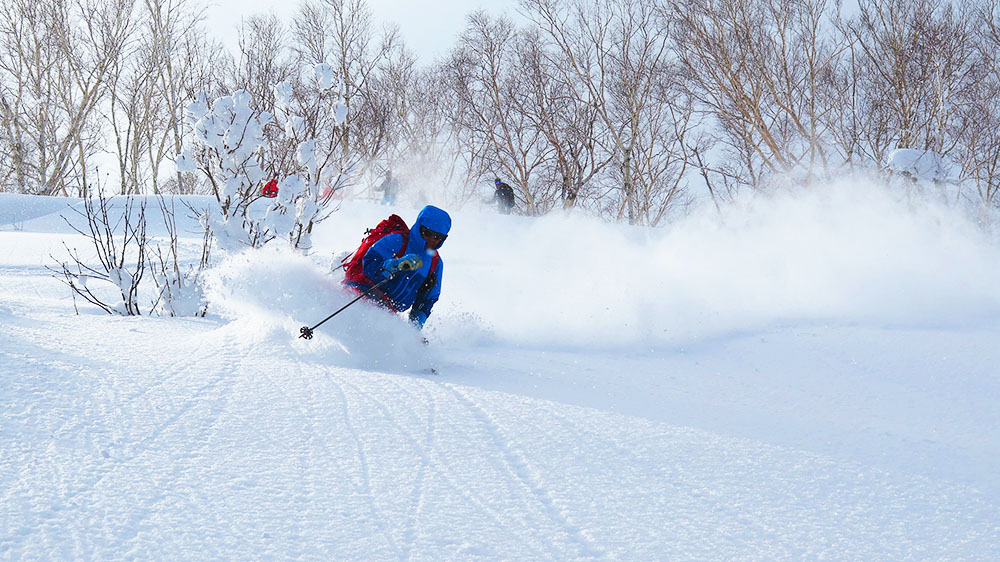
- The snow is so light that you ski through the birch forest even with 50–70 cm of fresh snow;
- You almost never need a helicopter: the powder is inside the resort and along its edges, and skins take you to the best backcountry.
Where to ski in Hokkaido (and why not only Niseko)
Three different environments within half an hour’s drive: that is why a single base covers the whole trip.
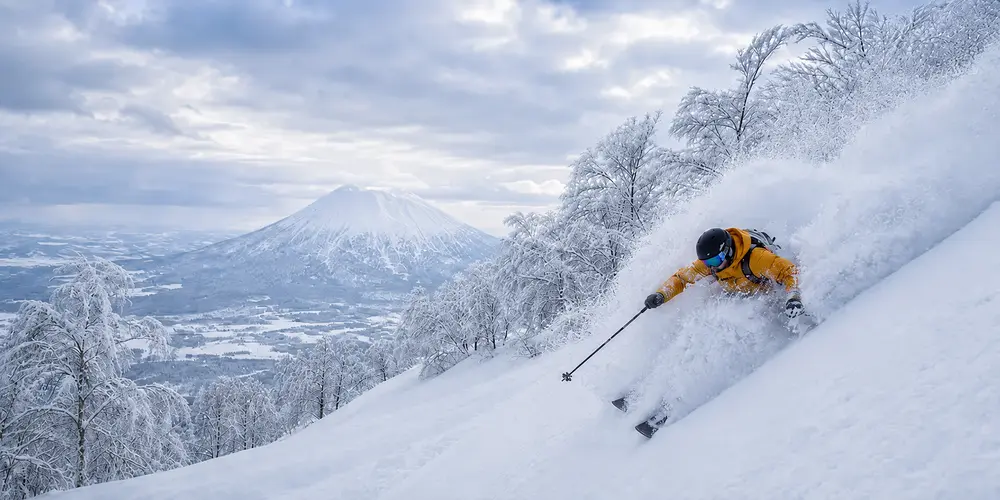
- Niseko — the ideal base: four linked resorts on Mount Annupuri, modern lifts, official backcountry gates and an international après scene, facing the perfect cone of Mount Yotei (the “Fuji of Hokkaido”).
- Rusutsu — half an hour away, the home of tree skiing: perfectly spaced forests, fewer people, untouched powder even at midday. For many it is the best day of the trip.
- Backcountry and Mount Yotei — with skins and a guide you leave the resorts behind: forest itineraries and, with the legs and the right conditions, the climb of Mount Yotei (1,898 m) with a descent into the crater.
Go deeper: the terrain, the freeride zones, the ski touring itineraries and the routes up Yotei are described in detail in Niseko and Hokkaido’s backcountry paradise.
What about Honshu? (Hakuba, Nagano)
The main island has excellent skiing too (Hakuba, Myoko, Shiga Kogen), with steeper, more alpine mountains. But for sheer quantity and quality of powder, on a first trip to Japan the answer is Hokkaido.
When to go skiing in Japan
- December (from mid-month): the season is under way, snow is plentiful, crowds are thinner — a good choice;
- January: the absolute peak. They call it “Japanuary”: it snows almost every night. This is the month guides pick, and the month of our trip;
- February: still excellent, with a few more clear spells — good for Mount Yotei;
- March: spring snow and open skies, but powder is far less reliable.
Book early: Niseko is a world destination with limited beds. For January and February, the best flights and lodgings are gone between August and October. On our trip the early-booking rate holds until 15 November: after that the price goes from €2,550 to €2,950.
How much a ski trip to Japan costs
The cost items for a 10-day trip:
| Item | Indicative cost | Horizon 10-day trip |
|---|---|---|
| Guided trip: UIAGM/IFMGA guide for the whole trip, trip organisation and travel-agency support, liability insurance, the guide’s own flight and expenses, Japanese villa with kitchen, rental car | €2,550 per person booking by 15 November, €2,950 after — groups of 4 to 6 | ✔ In the price |
| International flights to Sapporo (New Chitose), return | around €1,200–1,300 from Europe | ✘ Extra |
| Food in the villa (self-catering), breakfast, and meals out in Niseko | breakfast €11/day at the villa · ~€25 lunch · €30–35 dinner in standard restaurants | ✘ Extra |
| Lift passes | €55–65/day — usually 3–4 lift days out of 7 (none on ski touring days) | ✘ Extra |
| Ski gear: boots, skis, skins, airbag pack | €40–60/day to rent, if you don’t bring your own | ✘ Extra |
| Avalanche safety kit: transceiver, shovel, probe | available to rent locally | ✘ Extra |
| Personal, accident, trip-cancellation and baggage insurance | varies by policy — strongly recommended | ✘ Extra |
Realistic total from Europe: €4,300–5,100 per person, before ski and avalanche-kit rental — the spread is mostly the early-booking rate and how often you eat out. Adjust the flight line if you are travelling from North America or Australia. It is not a cheap trip, but for 7 days of guided skiing in the best snow on the planet it compares well with a week of heliskiing in Canada — which costs roughly twice as much — with the whole of Japan thrown in.
On your own or with a guided trip?
Going independently makes sense if you already have experience organising your own ski trips, can handle Japanese logistics (shuttles, local bookings, signage in Japanese once you leave Niseko) and intend to ski on-piste or inside the resort gates.
A guided trip with a mountain guide is worth it if real powder is the point:
- The guide knows where it is snowing: the programme adapts daily to conditions (Niseko, Rusutsu, backcountry, Yotei) — on your own, you ski wherever you happen to be;
- Off-piste safety: avalanche risk management, transceiver/shovel/probe, tested itineraries;
- Zero logistics: the Japanese villa, the rental car and the bookings are handled for you, and the guide’s own flight and expenses are already in the price;
- Small group: 4 to 6 people per guide.
The Horizon Adventures trip to Hokkaido is built exactly that way: 10 days in January, based in Niseko, 7 skiing days across the resorts, tree skiing at Rusutsu, ski touring days on skins and — conditions permitting — the climb of Mount Yotei, plus a day for Sapporo and the fishing villages. A UIAGM/IFMGA guide throughout.
What level do you need?
You don’t need to be an expert freerider, but you do need a solid base: skiing black runs confidently and some experience in fresh snow. Because Hokkaido’s powder is so light, it is the best place in the world to learn to ski off-piste — it forgives far more than the heavy snow of the Alps.
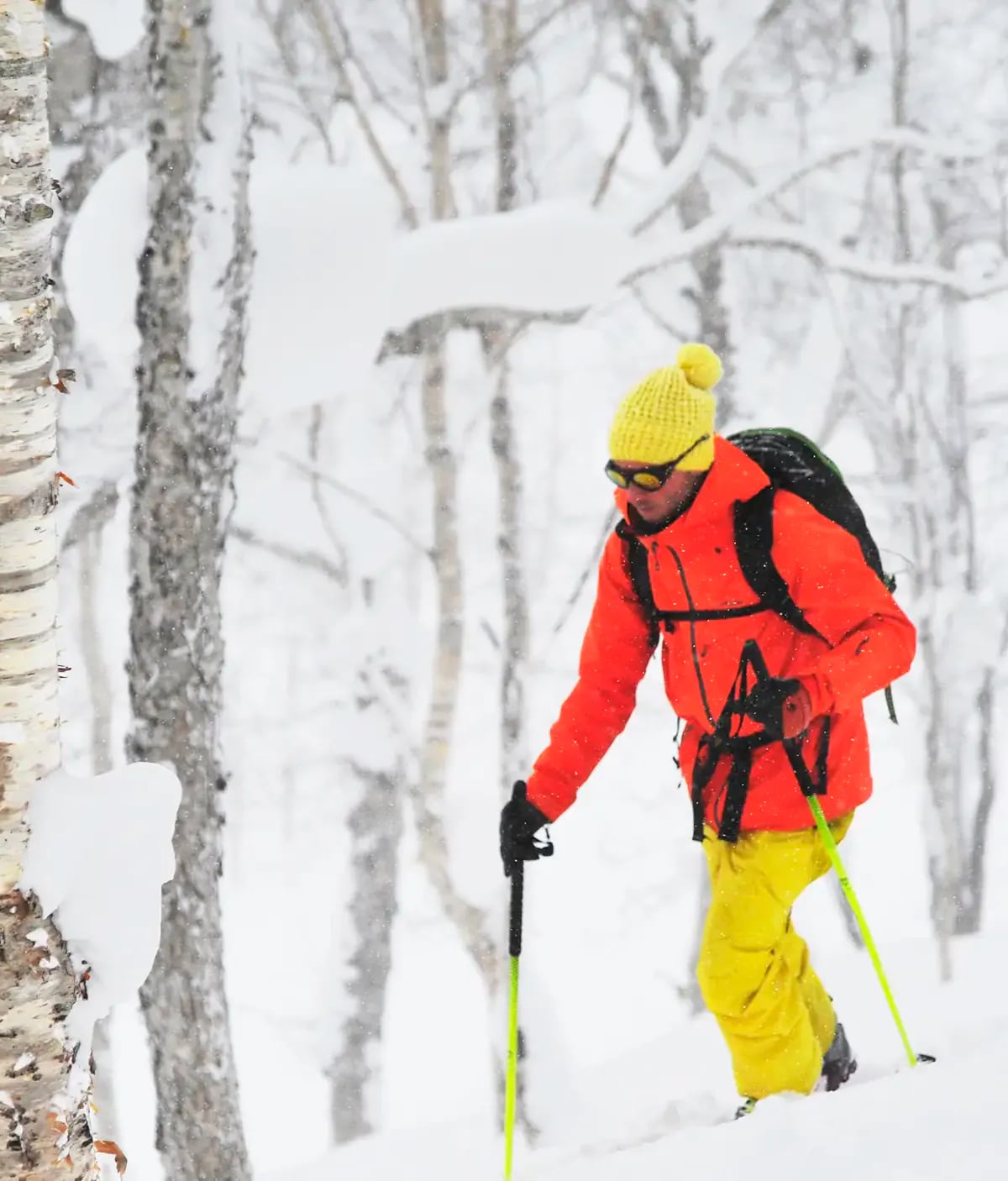
For the ski touring days all you need is the willingness to walk uphill: the ascents are moderate (400–900 m) and the guide sets the pace. If you have never used skins before, read our ski touring equipment guidebook.
Beyond the skiing: Japan in winter
Half the appeal of the trip lies off the slopes: the onsen (Japanese hot springs, best outdoors under falling snow), Hokkaido ramen and sushi — considered the country’s finest — the local sake, the fishing villages along the coast, and Sapporo, which in February hosts the Snow Festival with its giant ice sculptures.
Frequently asked questions
When is the best time to ski in Japan?
From mid-December to late February, with the snowfall peak in January (the famous “Japanuary”). March brings more sunshine but far less reliable powder.
How much does a week of skiing in Japan cost?
Budget €4,300–5,100 all in from Europe: €2,550 for the guided trip if you book by 15 November (€2,950 after), around €1,200–1,300 of flights, lift passes at €55–65/day for the 3–4 lift days, and meals. Ski gear and avalanche-kit rental are on top.
Do I need to know how to ski off-piste?
You need to ski well on-piste (black runs confidently). Hokkaido’s light powder is the ideal place to build off-piste experience with a guide.
Niseko or Hakuba?
For a first trip to Japan, Niseko and Hokkaido: more snow, perfect tree skiing, simpler logistics. Hakuba (Honshu) has steeper, more alpine mountains — ideal for a second trip.
Can you climb Mount Yotei?
Yes, with skins, good conditions and a guide: around 1,500 m of ascent for one of the finest descents in the world. On the Horizon trip it is one of the ski touring options, chosen day by day according to snow and weather.
How far in advance should I book?
Four to six months: to ski in January or February, lock in your place and your flights between August and October.
Come and ski the best powder in the world
Hokkaido, 10 days in January with IFMGA guides
Gold Tour

Niseko, Hokkaido, Japan
2026-09-08 16:58:43
Hokkaido ski trip, Japan world’s best powder
0
(No Review)
Come with us to ski the most beautiful powder in the World.
10 Days
10 Days
€2.950,00From €2.550,00
View details
– €400,00


Comment (0)